Top 5 Mistakes Youth Trap Shooters Make (And How to Fix Them)
Feb 06, 2026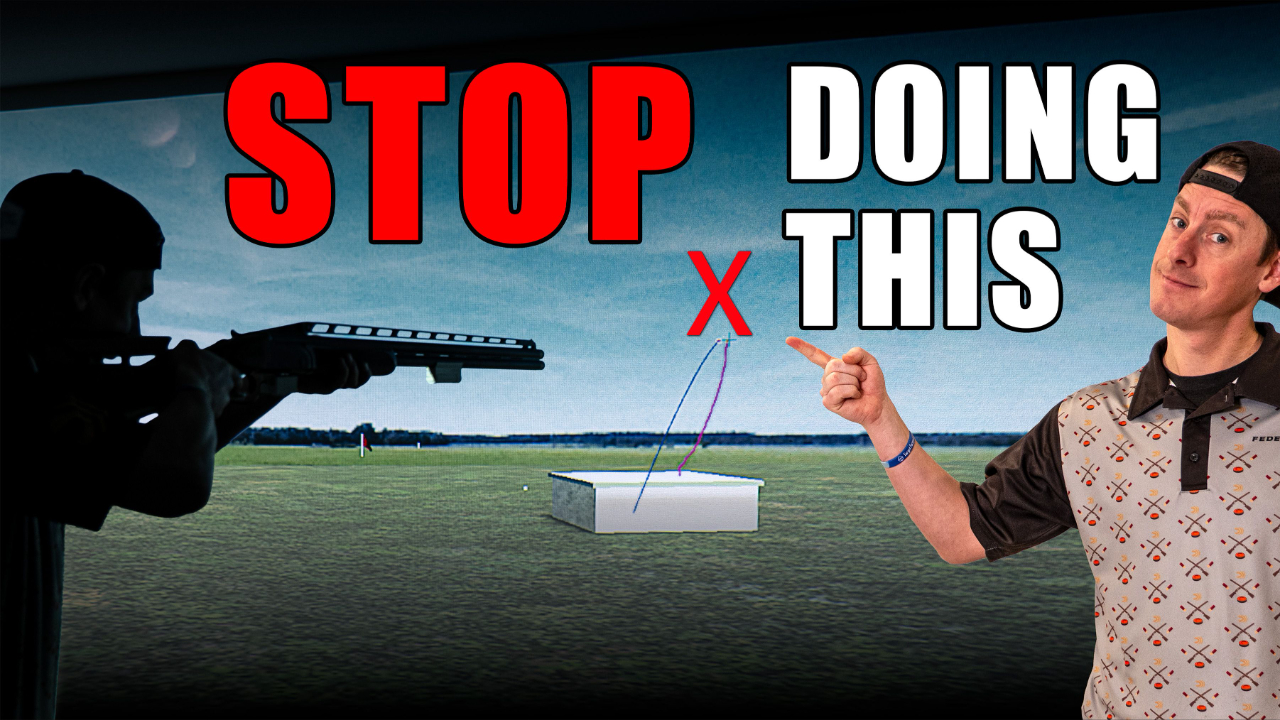
Walk the trap line at any youth trap shooting event and you’ll see athletes making some common mistakes. At the end of the day, as long as they’re being safe and enjoying the sport, that’s something worth celebrating. But for those who want to grow, improve, and become the best shooters they can be, we’re breaking down the top five mistakes youth trap shooters make—and how to fix them.
If you have experience with trap shooting, please let us know your thoughts on the TFL COMMUNITY!
In this video, we break down the top five mistakes we consistently see many youth and high school trap shooters make, and how to fix them. We use the TrueClays simulator indoors so we can visually demonstrate what’s happening and show corrections on the screen.
These fixes apply to youth shooters, beginner trap shooters of any age, and coaches who want a clearer way to diagnose what’s going wrong or how a shooter can become more consistent with the scores.
Mistake #1: Not Understanding How Your Eyes Work (Eye Dominance and Focus)
This first mistake is basic, but it’s crucial. Trap shooting is hand-eye coordination. If we don’t understand how our eyes work and set ourselves up to use them correctly, our coordination will never be as consistent as it should be.
There are two parts to this: Eye dominance & Focus
Eye dominance matters because your eyes lead your hands. If you’re shooting from the wrong side for your dominant eye, you can end up fighting your vision every shot. A common example is cross-dominance, like being right-hand dominant but left-eye dominant. That’s extremely common, and you’ll often see clues like:
-
consistent misses in the same direction with both eyes open
-
hard squinting or closing one eye to compensate
If you’re new to the sport, one of the best things you can do is learn to shoot on your dominant-eye side. A lot of shooters resist because they’re right-handed, but the “trigger hand” doesn’t do much besides pull the trigger. Switching sides can feel awkward at first, but for newer shooters it’s often much easier to change than people think.
If someone must stay on their current side even though their dominant eye doesn’t match, the goal is still to keep both eyes open. Instead of closing an eye, use glasses with a small piece of tape, a dot system, Vaseline, or another method that slightly obscures the off-eye while still allowing both eyes to remain open. Closing or squinting an eye cuts visual information, makes depth and speed harder to judge, and can even cause the other eye to dip, losing more information.
Also note that if you switch sides, gun fit may need adjustment so the gun is set up correctly for that shoulder and eye.
Focus. The key principle is simple: where your focus goes, your shotgun flows.
Two common focus mistakes:
-
focusing on the bead
-
focusing on the front of the trap house
Instead, start with a soft focus just beyond the trap house, in the area where the clay will appear. It’s easier for your eyes to come back than to go out. If your eyes start too shallow (on the bead or the front of the house), you often pick up the clay late and feel rushed.
There’s another focus error that shows up a lot: shooters call for the bird, pick up the clay, but then don’t trust what they’re seeing. They bring their eyes back to the bead to try to aim. That “double focus” usually causes hesitation or slowing down in the move. You can’t truly focus on the clay and the bead at the same time. One will take priority, and the moment your focus shifts back to the bead, the move tends to break down.
If you only remember one thing from this entire video, remember this: "Where your focus goes, your shotgun flows."
Mistake #2: Rushing the Shot
Rushing the shot is a huge issue, especially with youth shooters who have quick reactions and fast-twitch ability. They rip the gun so fast and so erratically that their timing has to be perfect. The moment conditions change or the bird comes out differently, they miss.
Rushing usually comes from one of three causes:
-
Bad focal points (you don’t see the bird clearly, so you panic and whip)
-
Bad hold points (you start in a spot that forces a longer move, so you feel behind)
-
Fear that the target is getting away, which is usually caused by one of the first two points.
Good focal points and good hold points reduce the feeling of being behind and allow a controlled move. If your gun speed is way faster than clay speed, it becomes mostly a timing game. That’s why “shooting fast” might look cool, but it can create more misses unless your timing is truly mastered.
The fix is to slow it down and make a smooth, controlled move. You have more time than you think, especially when your setup is correct. TrueClays makes this obvious because you can watch the difference between a rushed, guessy move and a smooth, controlled one.
Mistake #3: Poor Body Mechanics
Poor body mechanics show up in a few common ways.
-
A poor stance
If you’re leaned back with hips forward, it’s not going to be a good experience and it won’t lead to good results. -
Not changing footwork from post to post
Each post presents different angles. If you keep the exact same stance on post one and post five, you’re going to restrict your movement on the harder presentations.
For example, on post one you need freedom to move left on a hard left. If you’re too closed off, your hips bind, your movement gets restricted, you slow down, and you miss behind. Simply opening your stance and even flaring your foot slightly can give you the freedom of movement you need.
The goal is to find a stance on each post that gives you a free range of motion across your likely target window.
-
Driving the gun with the upper body
This is one of the most overlooked issues. A lot of youth shooters drive the gun with their hands and upper torso, and you’ll see their shoulders come back as they move. That can work sometimes, but it’s inconsistent.
Great trap shooters often drive more with the lower body. Think of it as a slight controlled push toward the target rather than a whippy upper-body swing. It’s not exaggerated. It’s a small, controlled movement that keeps the gun stable and the move repeatable.
Mistake #4: An Inconsistent Pre-Shot Routine
A consistent pre-shot routine settles you mentally and prepares you to execute. A lot of shooters change things constantly:
-
one shot they mount and shoot immediately
-
next shot they come in differently, readjust their head, settle in, and fiddle around
The details of the routine can vary, but the important part is consistency.
My routine example is tied to squad timing:
-
two shooters away: start staging (gun position and readiness)
-
shooter next to you: dial it in and prepare for the mount
-
then go through the same sequence: head down, lean in, mount, eyes in the right spot, call for the bird
After the shot: reset consistently, put the shell away, and get ready for the next one the same way every time.
Mistake #5: Putting Mental Focus in the Wrong Place (Score vs Process)
This mistake hits youth shooters and adults. People want to focus on score, but high performance comes from focusing on process.
The process includes:
-
training
-
technique
-
a consistent pre-shot routine
-
executing each step the same way
When shooters miss, many spiral. They throw their head back, slam shells, and create negative emotion around the miss. That emotion carries forward into the next shot. Instead, you need a reset that lets you let the miss go. In the video, the reset is rubbing hands on a towel. When that reset is done, the miss is gone, and the shooter goes right back into the pre-shot routine and focuses on the next clay.
Confidence is good when you hit, but it’s also powerful to think: that’s what I trained to do, I expected to hit that, that is like me to hit the target. And when you miss, you return to your preparation, your routine, and your next target.
THOUGHTS ON TRUE CLAYS
The TrueClays simulator is a great tool for this kind of teaching because it gives immediate visual feedback. You can see when focus is wrong, when a move is rushed, and when body mechanics get whippy. That makes it easier to correct problems quickly and build better habits.
My honest downside is that no simulator replaces the feel of real trap—wind, light, squad pace, pressure, and true target visibility. TrueClays is best used to diagnose and train, then confirm and reinforce those improvements on the actual trap line with real reps. I am an owner at a gun range. I want people to come shoot, but in the offseason, when the weather is bad, and for dry fire training, True Clays is the best tool that I have found.
And remember, whether it’s targets in the field or targets in life, you’ll only hit what you’re focused on — live the #TargetFocusedLife.
We know you have some opinions about this list! Jump over to the TFL COMMUNITY and tell us! We'd love to hear about it!