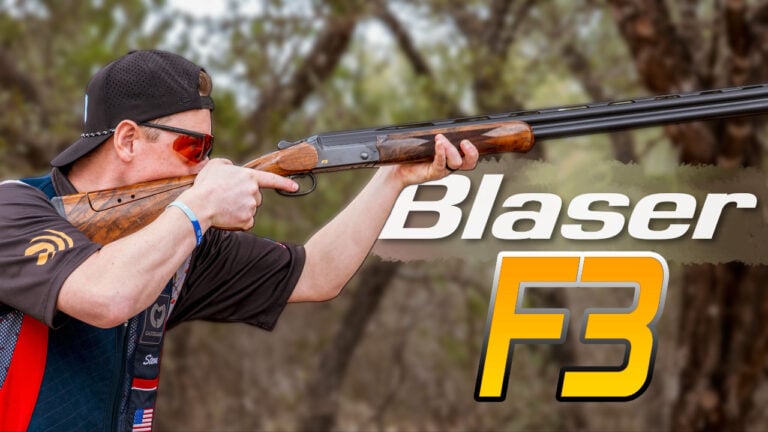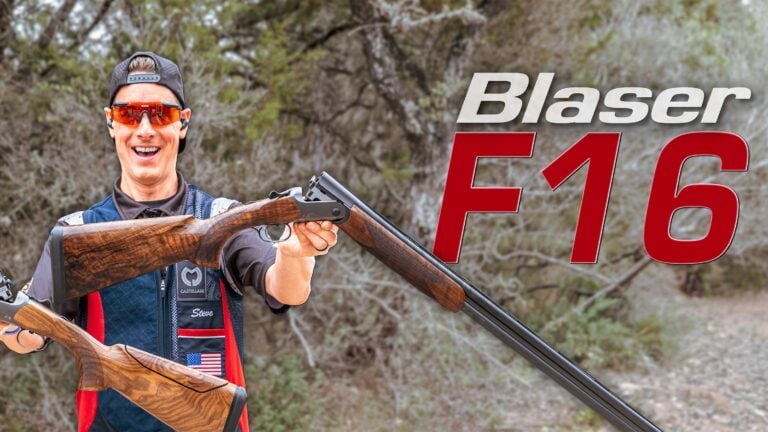
The FBX and F3 are two completely different guns. Blaser redesigned nearly everything. Some of it you feel the second you pick them up. The rest is deeper engineering that changes how the gun actually shoots. We put both side by side with a Blaser expert and broke down every difference, so you can figure out which one is right for your shooting.
In this article
- Blaser FBX vs Blaser F3: What’s the difference?
- Overall Design Philosophy
- Ergonomics and Receiver Redesign
- Recoil and Shoulder Contact
- Barrel and Forcing Cone Redesign
- Chokes and Breach Geometry
- Build Quality and Finish
- Forearm Redesign
- Modularity and Customization
- On the Range: How They Actually Shoot
- Final Thoughts
Blaser FBX vs Blaser F3: What’s the difference?
When you grab the FBX after handling the F3, you immediately feel it. The receiver is noticeably wider, the stock is fuller, the grip is bigger. Blaser didn’t just refresh it, they redesigned nearly every major component. We broke down both guns side by side with Nick from Woolley Shooting to understand what actually changed and why it matters to your shooting.
Overall Design Philosophy
The F3 has been legendary over the years with it’s modularity and interchangeability. The FBX represents Blaser’s next evolution, still keeping the F3 in production, but introducing a redesigned platform with refined ergonomics and barrel geometry. The key difference in philosophy: the FBX redistributes weight and increases receiver mass for a different feel in your hands, while keeping the underlying mechanics and trigger system intact.
Ergonomics and Receiver Redesign
The most immediate difference is how these guns feel when you pick them up. The FBX pistol grip is noticeably wider, about 4 to 5 millimeters larger all the way around, with an improved radius and a more pronounced lip. The stock itself is also considerably larger in overall width, giving the gun a fuller feel in your hand.
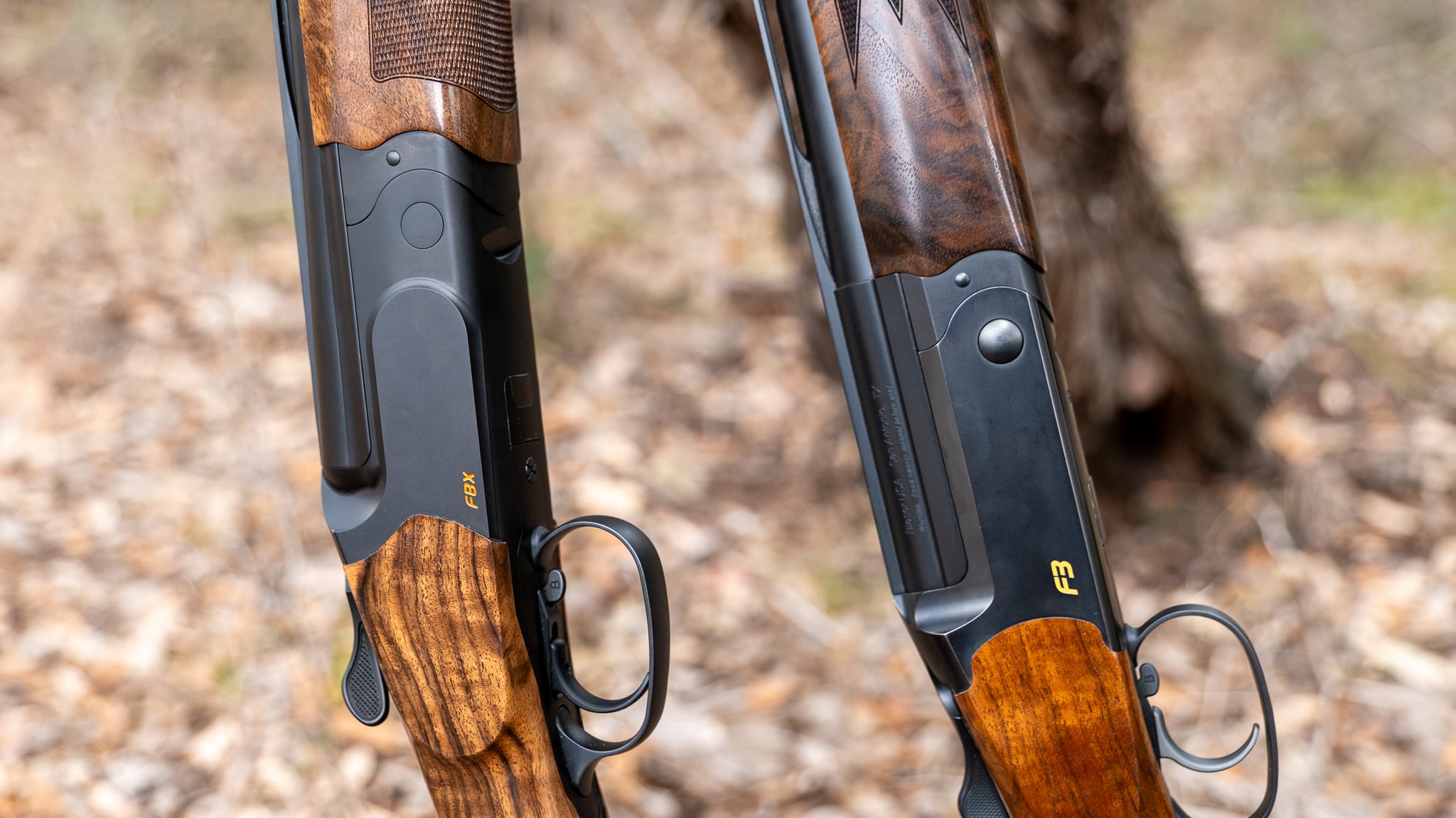
The receiver on the FBX got the biggest visual overhaul, hence the “FB” designation for “fat body.” The width is increased significantly, and Blaser added more mass across the shoulders and frame. Despite all this extra material, the FBX (at 4 lb 9.2 oz) weighs only about 4 ounces more than the F3 (4 lb 5 oz). That’s the real engineering win: how they distributed that weight changes how the gun feels completely. A well-balanced gun always feels lighter than it is, and a poorly balanced one feels heavier. The FBX proves that point perfectly.
Recoil and Shoulder Contact
The larger stock on the FBX increases surface area against your shoulder, which is designed to reduce felt recoil. The stock is also sitting higher than the standard F3 competition flat-rib configuration. For shooters who prefer more elevation or have a taller frame, this is a significant upgrade right out of the box.
The trigger system remains identical between the F3 and FBX. Both guns feature Blaser’s unique two-rod striker fire design, not a traditional hammer or inertia system. When you pull the trigger, two independent striker rods fire simultaneously with minimal movement. This delivers a more precise, consistent trigger with almost no creep. One major advantage: you can shoot all gauges (including 28-gauge and 410-bore) with absolutely zero gunsmithing, which most other platforms require.
Barrel and Forcing Cone Redesign
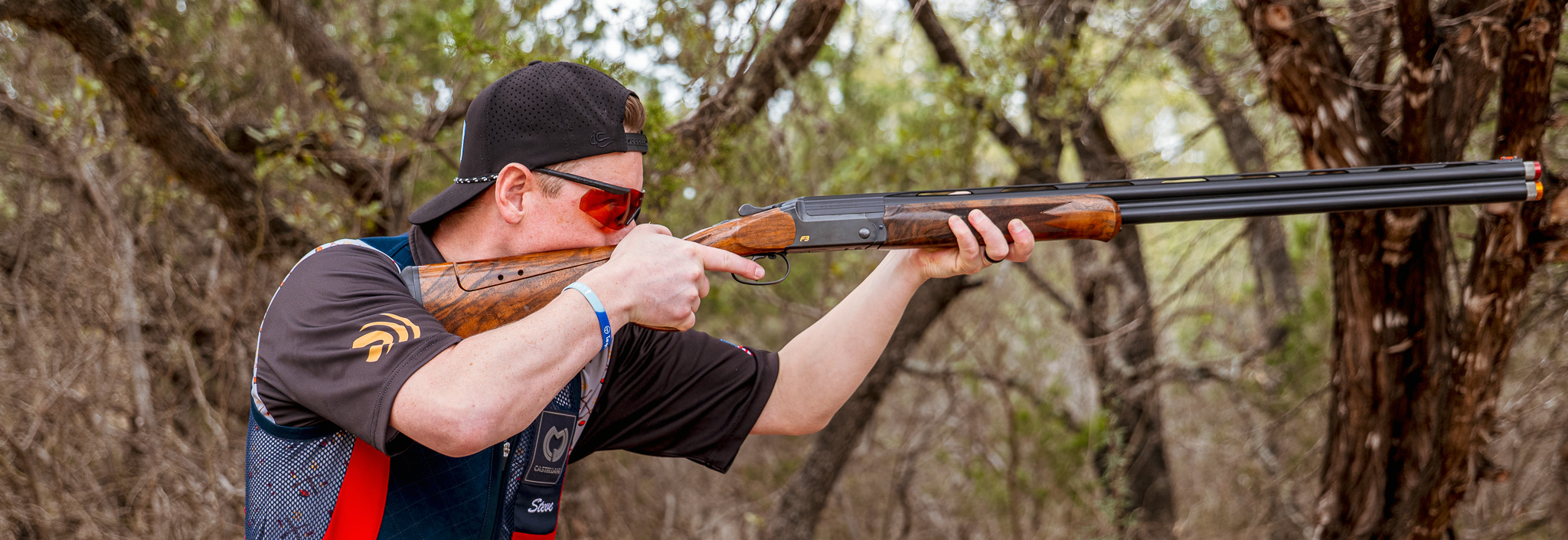
Blaser made substantial changes to the barrel assembly on the FBX. The forcing cones are nearly doubled in length compared to the F3, which helps with both pattern and recoil management. The barrels themselves are about 100 grams lighter thanks to several design changes, but don’t mistake that for a less rigid barrel.
The F3 featured tungsten weights on a bracket that you could reposition forward or backward for balance adjustment. The FBX eliminates that bracket and redistributes the weight into the forearm instead, lowering the center of gravity and letting both hands work more simultaneously when you swing the gun. This approach centralizes weight between your hands for more consistent movement.
The ventilated center rib is new on the FBX barrels. The F3’s standard flat-rib competition barrels have a solid rib, though the Super Sport variant came split with an adjustable option. All FBX barrels now use the ventilated design.
Chokes and Breach Geometry
Both guns now use Briley thin-wall S2-threaded chokes, but the FBX took it further. The FBX barrels feature completely flush-threaded thin-wall chokes with zero bulge at the choke end—much cleaner visually and functionally. The FBX also offers fixed choke options, something the F3 does not have. The new chokes are noticeably lighter than the F3 standard, helping maintain that lower center of gravity.
Build Quality and Finish
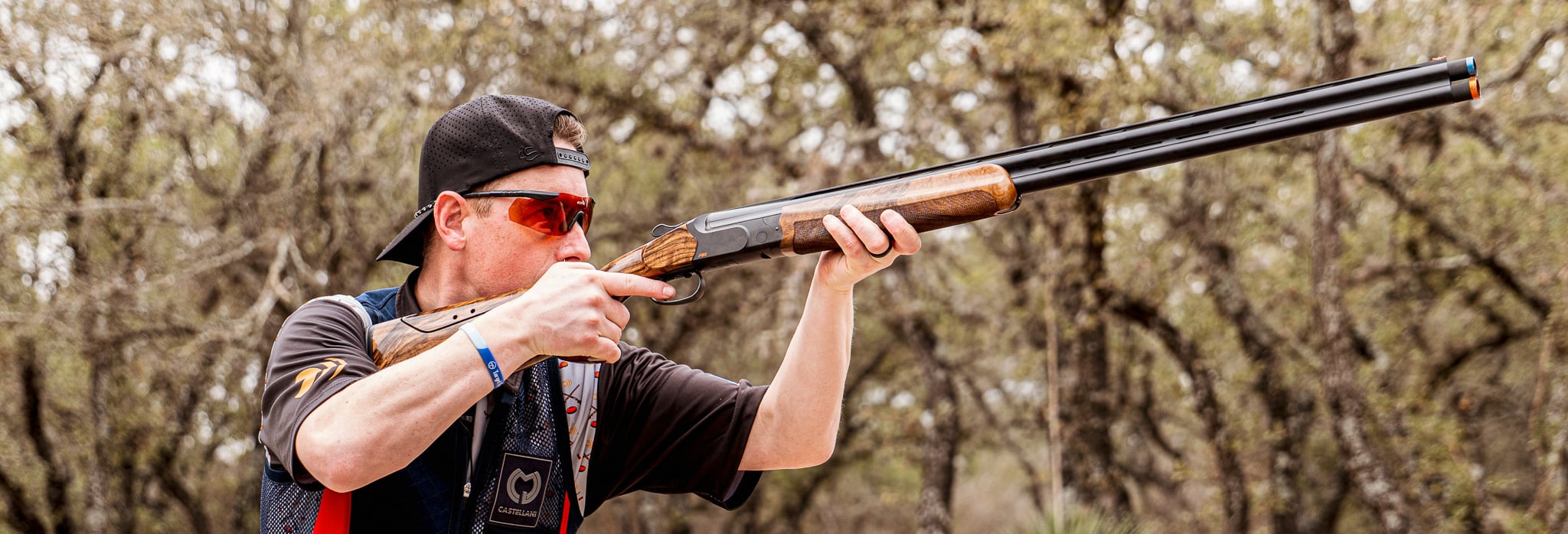
The FBX comes standard with DLC (diamond-like coating) on all external metal surfaces. Frame, barrels, trigger guard, everything. DLC is incredibly durable, corrosion-resistant, and won’t wear off from handling. If you’re one of those shooters who handles the receiver constantly while shooting, DLC is a real advantage over traditional bluing.
The F3 offers multiple engraving grades and options at different price points, from simple base engraving to the Grand Lux with deep roll-printed patterns. The FBX currently ships in DLC finish only, with engraving options (hopefully!) coming down the road. Blaser isn’t phasing out the F3, they’re introducing the FBX as the newest evolution while keeping the F3 in the lineup for shooters who value extensive customization options.
Forearm Redesign
The FBX forearm is completely redesigned with a hybrid profile that’s neither a full schnobel nor a true beaver tail. It’s somewhere in between, with nice channels running through it and excellent checkering. The interior houses the new weight system with adjustable 20-gram weights on a track that you can position forward or backward to fine-tune balance to your preference.
The F3 uses the more traditional schnobel forearm on most sporting configurations, which is the most common style for upland and clay shooting. The FBX’s new profile gives it a distinctly different feel in your hands, and most shooters who’ve held both prefer one or the other based on what they’re used to or what fits their hand better.
Modularity and Customization
The F3 is famous for modularity. You can swap stocks, barrels, and receivers across different configurations because Blaser’s tolerances are incredibly tight and everything is built to German engineering standards. You can mix a flat-rib barrel with a mid-stock, a Vantage barrel with a flat stock—it all works. You can even put an FBX forearm on an F3 receiver and vice versa because the mechanics are interchangeable.
Currently, the FBX is available in flat-rib configuration only. Blaser is planning to roll out Vantage and Super Sport options down the road, along with additional engraving patterns. The FBX isn’t replacing the F3, it’s entering the market gradually as the newest platform while the F3 continues to offer shooters who want maximum customization out of the box.

On the Range: How They Actually Shoot
Both guns shot incredibly well. The FBX feels noticeably different between your hands, more substantial, fuller stock, and the weight distribution makes it swing a bit differently. Most shooters immediately notice the FBX’s larger profile and how that impacts gun movement and recoil management.
Nick’s take: the FBX wins for pure shooting feel. The newest technology, the refined ergonomics, and how it all comes together make it his choice. The F3 is still a great gun with full modularity right now, but once Blaser rolls out those additional barrel options for the FBX, the gap closes even more.
My take was a little different. The FBX felt better in my hands and moved better for me, no question. The one catch was a bit of recoil coming up high on the face, but that’s becuase the setup we were shooting wasn’t dialed in for me. If the FBX had a Vantage rib right now, I’d go FBX 100%. But for the moment, the F3 still wins in terms of customization, so that’s the trade-off to weigh.
Here’s the real takeaway: if you like a slender, more manageable profile between your hands, the F3 is your gun. If you prefer a fuller, more substantial feel with modern ergonomics, the FBX is the way to go. Both are exceptional shotguns.
Final Thoughts
The Blaser FBX isn’t an F3 replacement; it’s Blaser’s answer to what a modern sporting shotgun should feel and perform like after 22 years of the F3 dominating the market. The redesigned receiver, barrel geometry, weight distribution, and ergonomics all point to one thing: Blaser listened to what shooters wanted and delivered it. The F3 isn’t going anywhere, and for good reason. But if you’re shopping for a new Blaser today, the FBX is worth serious consideration.
Want to dig deeper on either gun? Check out our full Blaser F3 review or our full Blaser FBX review.
Whether our targets in the field or our targets in life, we’ll only hit what we’re focused on — live the #targetfocusedlife